
Mental Health Treatment That Fits the Life You’re Already Living
You don’t have to check out of your life to get better. Our outpatient mental health treatment in Richardson, TX gives you real psychiatric and therapeutic care during the day or evening—then you go home to your own bed, your family, and your routine. It’s structure without the shutdown.
 Verify Insurance


- Psychiatrist-Led Care
- Most Insurance Accepted

We Accept Most Insurance Plans:





We’ll verify your mental health benefits in minutes — 100% confidential.
What is outpatient mental health treatment?
Outpatient mental health treatment is structured clinical care—therapy, psychiatry, and skill-building—that you attend during the day or evening while continuing to live at home. It sits between seeing a therapist once a week and staying overnight in a hospital: more support than a single session, without pressing pause on your entire life.
At RD Outpatient Rehab, that care is delivered through two levels of intensity—Partial Hospitalization (PHP) and Intensive Outpatient (IOP)—and led by a psychiatric team that keeps your medication and therapy coordinated in one place. You get intensive help, then practice what you learn in the life you’re actually living.
 Weekly therapy isn’t enoughSymptoms disrupt work or sleepJust left a hospital or ERMeds & therapy feel disconnected
Conditions we treat
Treatment starts with a psychiatric assessment, not a script. We name what’s actually going on—then build a plan around it. These are the conditions we work with most often.
- 01
Depression
When the low won’t lift, sleep and appetite are off, and things you used to care about feel flat. We combine therapy and, when appropriate, medication to rebuild momentum.
- 02
Anxiety & Panic
Racing thoughts, constant dread, or panic attacks that hijack your body. We teach concrete tools to calm the nervous system and take back your day.
- 03
PTSD & Trauma
Flashbacks, hypervigilance, and memories that ambush you. Trauma-focused therapy that moves at a pace your nervous system can actually handle.
- 04
Bipolar & Mood Disorders
Mood swings that disrupt work and relationships. Careful psychiatric medication management paired with therapy to build day-to-day stability.
- 05
Dual Diagnosis
When mental health and substance use overlap, we treat both together—not one at a time—so progress in one doesn’t unravel the other.
- 06
Grief & Life Transitions
Loss, burnout, divorce, or a season that knocked you off course. Support to process what happened and find footing again.
Evidence-based therapies, tailored to you
There’s no single “right” therapy—so we combine approaches with real evidence behind them and match them to what you’re facing.
- 01
Cognitive Behavioral Therapy (CBT)
Learn to spot the thought patterns driving anxiety and depression—and how to interrupt them—so your reactions stop running on autopilot.
- 02
Dialectical Behavior Therapy (DBT)
Practical skills for emotion regulation, distress tolerance, and relationships—especially useful when feelings hit hard and fast.
- 03
Trauma-Focused Therapy
Structured, evidence-based approaches to process trauma safely, reduce flashbacks, and loosen the grip the past has on the present.
- 04
Psychiatric Medication Management
On-site psychiatric providers evaluate, prescribe, and fine-tune medication—coordinating directly with your therapists so care isn’t fragmented.
- 05
Group Therapy
Small, guided groups where you practice skills, feel less alone, and learn from people who genuinely understand what you’re going through.
- 06
Family Involvement
With your consent, we help the people around you understand your care and support your recovery—because healing rarely happens in isolation.
How intensive should your care be?
Your assessment matches you to the right level—and we step you down as you stabilize, so support tapers instead of stopping abruptly.
- 01
Partial Hospitalization (PHP)
Our most intensive outpatient level—around 5–6 hours a day, up to 5 days a week. Ideal right after a hospital stay or when symptoms need close, daily support.
- 02
Intensive Outpatient (IOP)
About 3 hours a day, 3–5 days a week, with morning or evening tracks—so you can hold down work or school while still getting real, structured care.
- 03
Continuing Care & Step-Down
As you stabilize, we reduce frequency and shift toward maintenance—relapse-of-symptom prevention, ongoing therapy, and a plan for staying well.
Get better without pressing pause on everything else
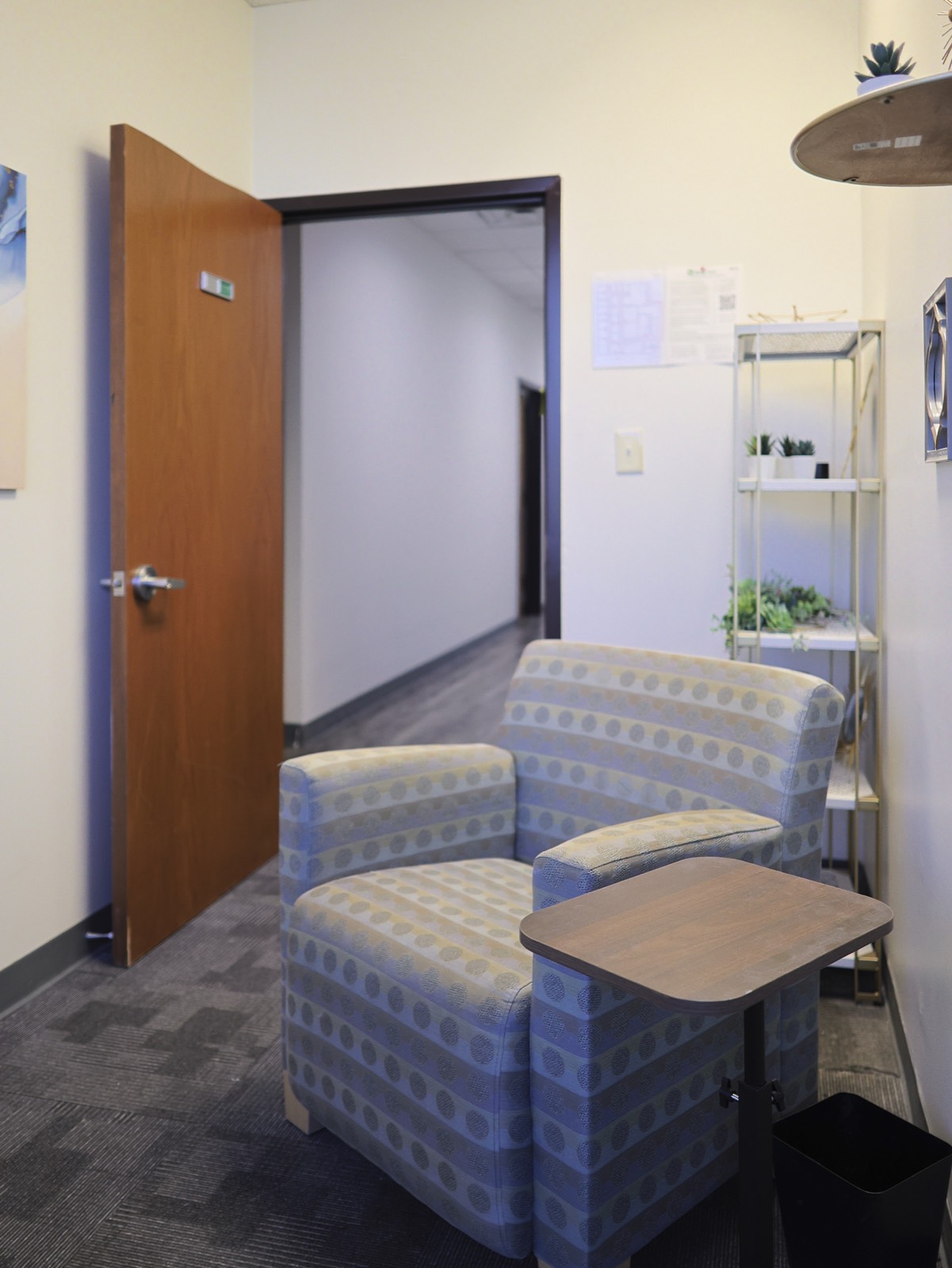
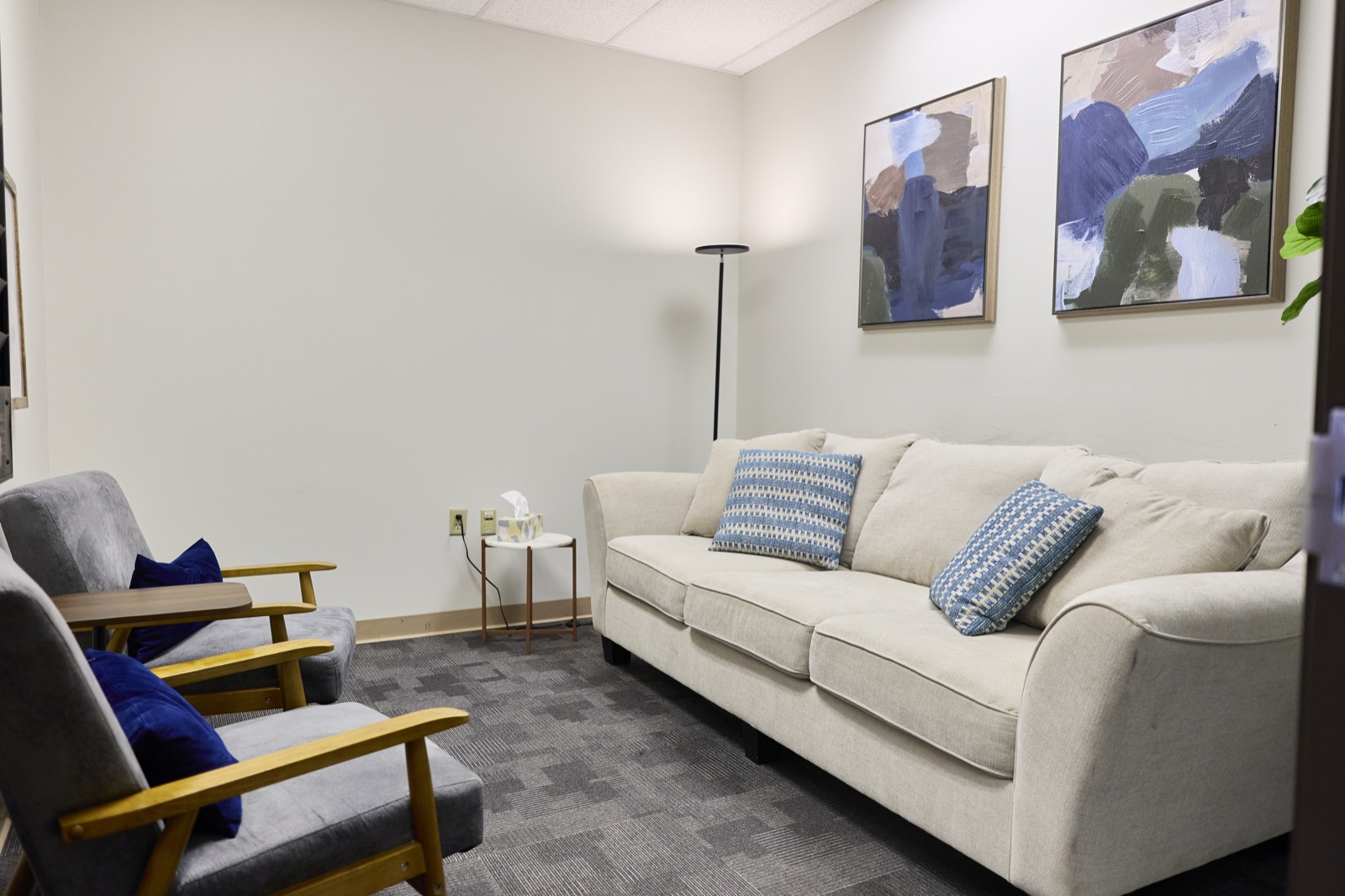
Inpatient care has its place, but for most people it’s more disruption than they need. Outpatient treatment gives you the same evidence-based therapies—CBT, DBT skills, trauma-focused work, and psychiatric medication management—on a schedule that leaves room for your job, your classes, and the people who depend on you.
That matters clinically, not just logistically. Practicing new coping skills in the middle of your actual week—at work, at home, with the relationships that stress you out—is what makes them stick. You bring real life into session, and you take real tools back out.
What a week of treatment actually looks like
Every plan is individualized, but here’s the shape of a typical week in IOP. You’ll always know what’s coming—no mystery, no guesswork.
Sessions run in small groups a few days a week, with regular one-on-one therapy and psychiatric check-ins woven in. Between sessions, you practice specific skills in real situations and bring what happened back to the group.
Guided group therapyIndividual sessionsPsychiatric check-insSkills practice at homeOptional family sessionA clear path from first call to feeling like yourself
No confusing intake maze. Four steps, and a real person walking you through each one.
- 01
Confidential assessment
A licensed clinician listens to your history, symptoms, and goals, then recommends the right intensity of care—no pressure, no judgment.
- 02
Insurance verified for you
We check your benefits and explain your coverage in plain English before anything starts, so there are no billing surprises.
- 03
- 04
Skills that outlast treatment
We focus on long-term resilience and relapse-of-symptom prevention, then step you down gradually as you stabilize.
People who got their lives back
Rated 4.8 out of 5 across 62 Google reviews from clients and families across Richardson (DFW) and San Antonio.

“Real Deal is without a doubt the most structured and therapeutic rehab program I have ever attended. It has brought me to one year in sobriety and I don't know what I would have done had I not participated in the program. I highly recommend Real Deal to anyone struggling with alcohol and/or drugs. It's amazing. Just try it and you will see for yourself!”
“Realdeal wellness and therapy will always have a special place in my heart for all the opportunities and care they've provided. They helped pave the way for me to achieve sobriety and build a better life for myself and when I needed them the most they were there in a heartbeat. Extremely grateful for their services and the environment they provide for recovery.”
“Real deal is a truly rare place that has instrumental in my rehabilitation. The staff truly cares deeply about you and wants you to succeed. Also Real Deal is one of not many outpatient rehab places that takes primary mental health cases. Highly recommend this place and thank you to everyone who helped me.”
“I love all of these guys. These guys made me feel better. They made me think better. I don't feel those ways anymore. Before I came here, I was certain I wouldn't be alive for much longer. These guys fixed that.”
“The Real Deal is an incredible program that prioritizes accessibility more than almost any other PHP, IOP, and Housing program. With housing fees at lower price point than a majority of sober livings, the option to have your pet with you, and a supportive recovery community, they really do try to eliminate barriers to care as much as possible.”
“Real Deal is different then the others. It offers flexible support for recovery, allowing you to live at home while attending therapy and counseling sessions. It's designed to fit your schedule and provides tools to maintain sobriety and prevent relapse. The focus on mental health is a great way to get to the root of what's gone wrong time and time again. Cannot recommend enough!”
“Real Deal is full of people who are passionate in helping others obtain and maintain their sobriety. They are always willing to lend a helping hand without judgement. They also have employees with real world experience using their own experiences to help others heal.”
Find the right starting point
Not sure where you fit? These pages go deeper on the specific care people ask us about most.
- 01
Depression Treatment
When the low won’t lift on its own—structured outpatient care to get momentum back.
- 02
Anxiety Treatment
Tools for panic, worry, and the physical toll anxiety takes on your body.
- 03
PTSD & Trauma
Trauma-focused therapy that moves at a pace your nervous system can handle.
- 04
Dual Diagnosis
When mental health and substance use overlap, we treat both together—not one at a time.
Mental health treatment questions, answered
Straight answers before you ever walk in.
It's structured clinical care—therapy, psychiatry, and skill-building—that you attend during the day or evening while living at home. It offers more support than weekly therapy without requiring an overnight hospital stay, and it's delivered through two levels of intensity: PHP and IOP.
Weekly therapy is a great fit for mild, stable symptoms. Outpatient programs like PHP and IOP give you several hours of structured care per week—group therapy, individual sessions, and psychiatric support together—when symptoms are disrupting your sleep, work, or relationships and once-a-week isn't enough.
PHP is more intensive—roughly 5–6 hours a day, up to 5 days a week—often used right after a hospital stay. IOP is about 3 hours a day, 3–5 days a week, with morning or evening tracks so you can keep working or attending school.
Yes. Our psychiatric providers can evaluate, prescribe, and adjust medication as part of your plan, and they coordinate directly with your therapists so your care is connected rather than fragmented.
No. Your care is confidential and protected by HIPAA. Many clients attend evening IOP specifically so treatment fits around work or class without anyone needing to know.
Depression, anxiety and panic, PTSD and trauma, bipolar and mood disorders, grief and life transitions, and co-occurring substance use (dual diagnosis), among others. Your assessment determines the right level of care.
Most major plans cover outpatient mental health care, and federal parity laws require many insurers to cover it comparably to medical care. We verify your specific benefits for free and explain your coverage before you start.
Often within a day or two. Call 469-747-1201 and we'll complete a confidential assessment and verify your insurance quickly so you can begin without a long wait.